Explore Colorado's fascinating ski history through these two books. Get yourself a hat too. Visit the early hills and areas through words and images. Enjoy reading about the early skiers and their fun—and sometimes risky—adventures. BUY HERE FOR SIGNED COPIES AND FREE SHIPPING.
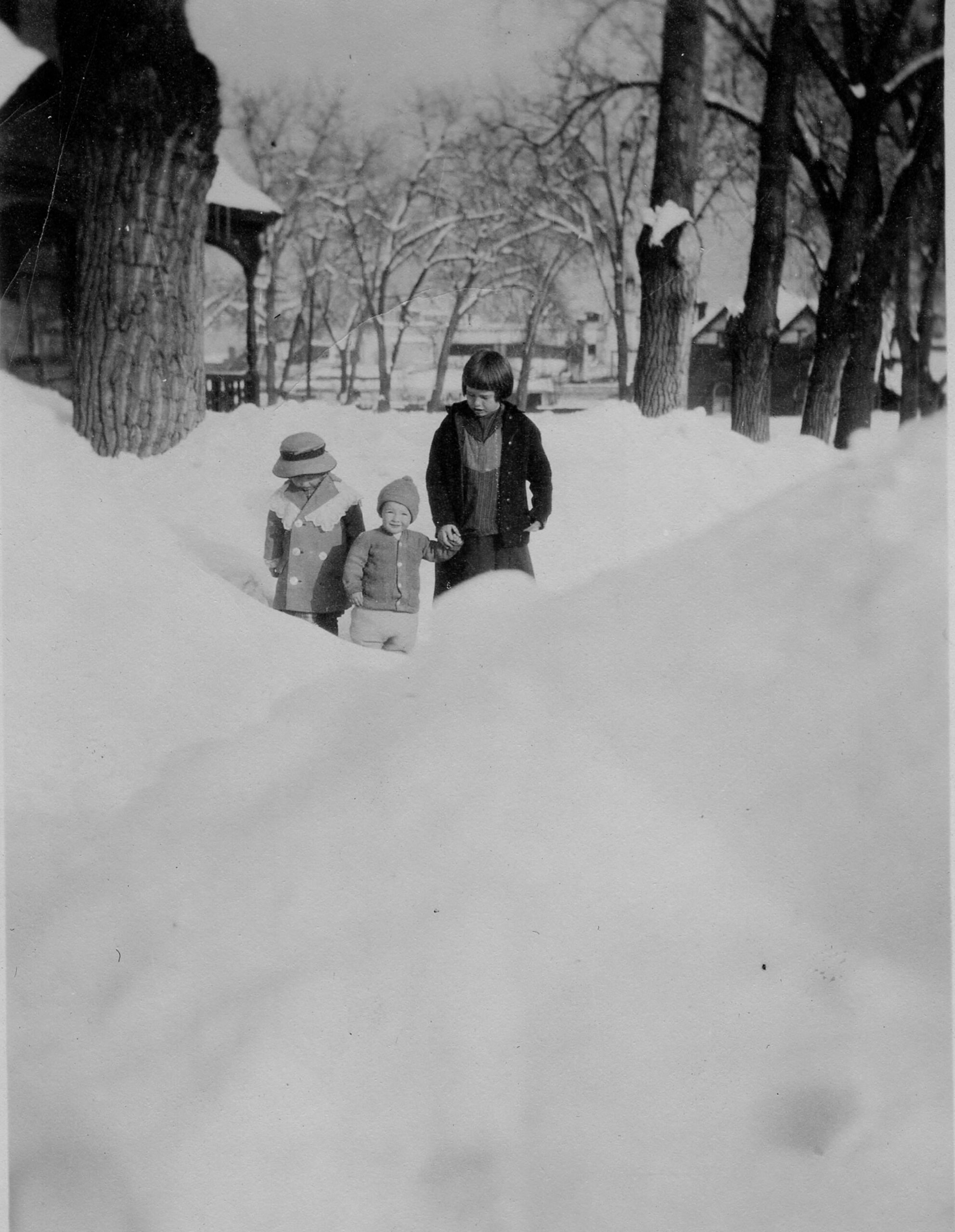
Martha (R), Mary Louise (L) and Sylvia Springsteen in the aftermath of the Big Snow of 1913.
In 1913, Denver received a massive amount of snow, which shut down the city for everyone except for one man: Carl Howelsen. He went skiing around and inspired George Cranmer to ask for lessons in how to ski. That was the beginning of the thirst for skiing in Denver.
Howelsen became the “Johnny Appleseed” of skiing in Colorado and, with friends, ignited the extreme snow sport of the day, ski jumping. You can read all about it in “Lost Ski Areas of Colorado’s Front Range and Northern Mountains.”
The photo above shows the author Caryn’s grandmother Martha and her sisters walking after the storms in northwest Denver, which is now Highlands.
We had a beautiful, but dry, autumn in 2021. However, some of the ski areas have opened with manmade snow and limited runs.
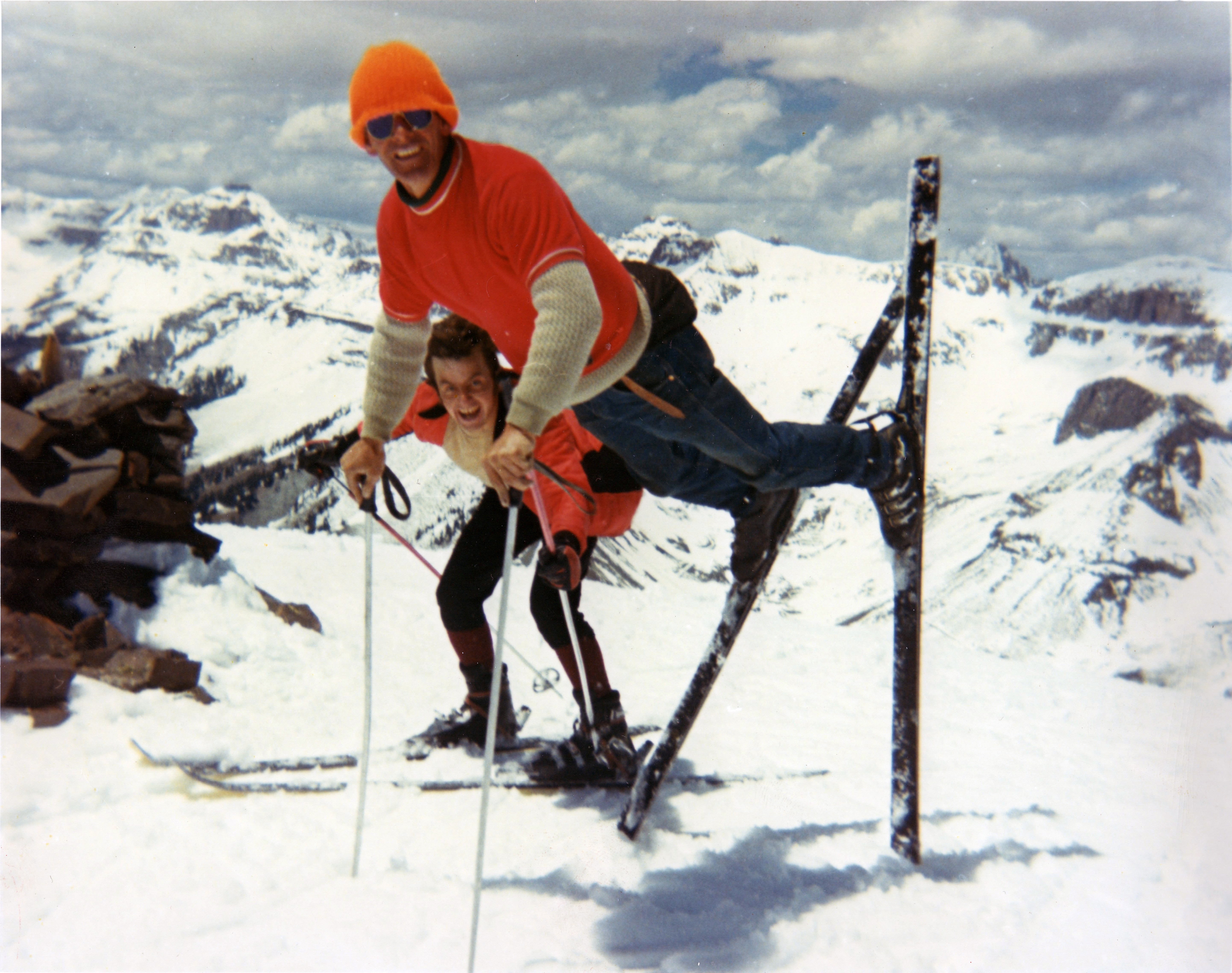
Bill ‘Senior’ Mahoney (R) and Stanley Rice ski at 12,000 ft. on Ajax Mountain. Photo courtesy Senior Mahoney.
On March 16, 2021, we attended a virtual meeting of the Aspen Historical Society, which featured Western State College University’s Dr. Duane Vandenbusche (Colorado’s new state historian) speaking about ski history. Dr. Vandenbusche had been a great help to us when we wrote our second book on the lost areas in central and southern Colorado. During Q&A we asked him if he knew Senior Mahoney. He replied that yes, he was great friends with Billy Mahoney, and that Billy had died recently. We were shocked and saddened to hear it. We later read obituaries online and learned that he died of complications from COVID19 on Friday, January 15, 2021.
Senior Mahoney had also been a great help to us as we wrote that second book. We were able to meet with him for a few hours and interview him in his garage studio in Montrose, which was chock full of ski memorabilia. He was gracious but real (in overalls), and he warned Caryn right up front that he might swear. He gave us permission to use his images as we liked, including films of skiing in the 1930s that he had acquired.
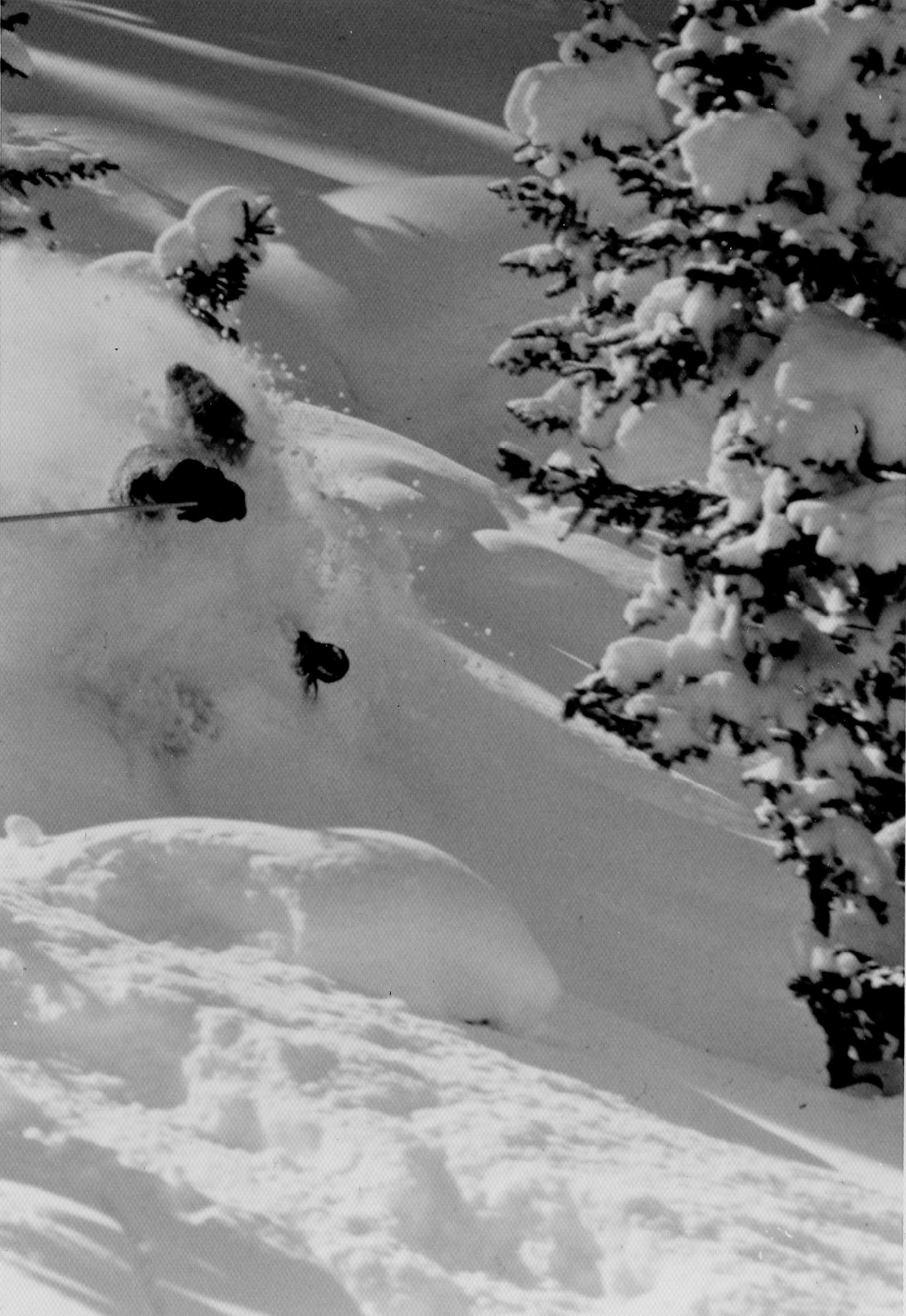
It was a real pleasure to get to meet and talk with Senior that day, and many quotes and much information from him are featured in our second book, including the photo above where he is full of life and enjoying skiing to the hilt. The photo below of him in the powder is one that we did not include in the book.
Senior Mahoney skis Mammoth slide in 1970.
Chapter 20 on San Miguel County in Lost Ski Areas of Colorado’s Central and Southern Mountains reads, “Bill ‘Senior’ Mahoney was from a longtime mining family and became a shift boss in the Idarado Mine. He was also from a skiing family. In fact, the skis his granddad made and skied on in the 1890s in Bonanza, Colorado—where Mahoney was born—are on display at the Telluride Historical Museum. His family moved to Telluride in 1931, when he was three, and he and his brothers started skiing then.” The subtitle of the chapter describes their early skiing best: “Skiing Everywhere and a Portable Rope Tow.” With his passion for skiing, and as Telluride mining died, Senior later helped create Telluride Ski Area and became its first mountain manager and vice president. What a skiing legacy he leaves!
Farewell, Senior Mahoney. Thanks for sharing your memories with us and with our readers.
Colorado skiers have been sans powder for a month due to COVID-19.
Governor Jared Polis said in early March that he would not shut down ski areas, but he encouraged skiers to social distance because of the new coronavirus. Then, as the resorts closed voluntarily, he issued an executive order suspending skiing for one week. That was mid March. On March 19th he extended the ban. Also, he discouraged people from traveling to the high country.
Most skiers left the resorts as they shut down, but backcountry enthusiasts just kept skiing. TV news reports showed that the parking lot at Berthoud Pass was packed. In mid-April the reports were that the Colorado Department of Transportation (CDOT) blocked parking areas on Loveland Pass with snow to end parking along the mountain road.
Current generations of skiers are not the first to experience a loss of the “healthful sport” in their lives. World War II brought almost a complete shutdown of small ski areas and hills all over Colorado as the USA mobilized to fight overseas. The winter carnival in Hot Sulphur Springs shut down in 1940. When the war ended things would be different in Colorado; large resorts and alpine skiing eclipsed the little hills and Nordic skiing. Read more about this in the lost ski area books.
What will the changes be to skiing after this pandemic has passed? Perhaps Nordic skiing will become more popular because it lends itself to more social distance between skiers. Or, maybe skiers will have to ride two to a gondola unless they’re family members. Whatever happens, we know Coloradans will keep their chins up, be part of the national effort to defeat this virus, and find a way to ski after the emergency is over.
In honor of the stock show and all the folks who helped skiing get started in Colorado by offering their hills for runs and their tractors and trucks to power tows, here’s a good story found in Lost Ski Areas of Colorado’s Central and Southern Mountains.
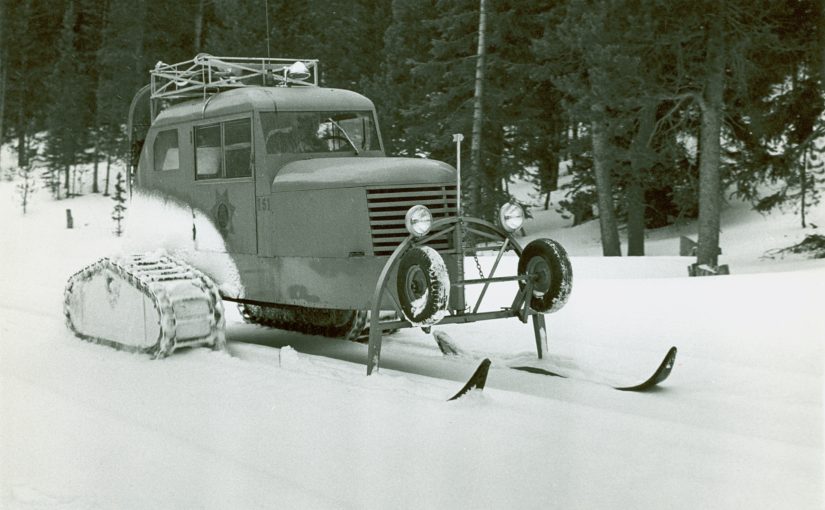
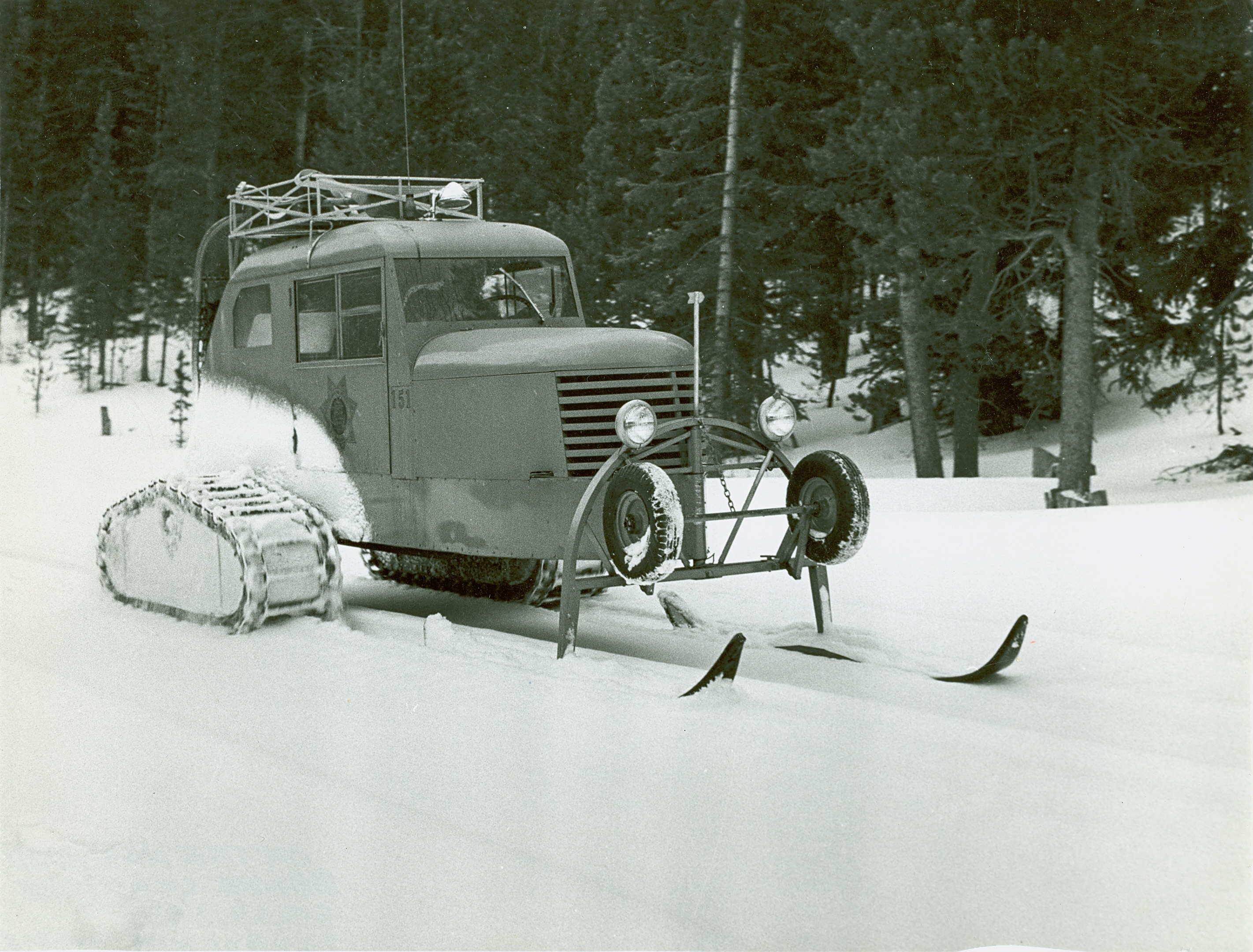
Colorado’s ranchers, farmers, and tradesmen have always been very mechanical and ingenious. They had to be. For example, this vehicle was equipped with skis to help CDOT employees take care of the roads and skiers on the roads in early days. But did you ever hear of someone putting skis on horses so their owners could go places in deep snow?
The Colorado Division of Transportation (CDOT) used this vehicle to take care of the roads and early skiers. USFS photo.
Well, here’s just one such story, which was published in 1884 in the Rocky Mountain Sun.
A freighter named Brockman recently brought his horses from Summitville to Baker’s station on snow shoes. The shoes were made of wood, two inches thick, eight inches wide and eighteen inches long, and were fastened to the horses feet by means of wires and straps. The shoes were fastened on, and after a few days of practice in Summitville, the horses learned the modus operandi of the scheme, and on Monday Mr. Brockman rode one horse out over from fifty to one hundred feet of snow, while the second horse pulled a sled loaded with provisions over the same course.
You’re not sure whether this is real or not? Neither are the authors, who found the story while looking through old newspapers online.
Thanks to Colorado’s ranchers and tradesmen for their contributions to Colorado ski culture!